Roofing Terms Glossary: 75+ Terms Every Homeowner Should Know

Understanding roofing terminology helps you communicate with contractors, navigate insurance claims, and make informed decisions about your home. This comprehensive glossary covers everything from basic components to technical terms you'll encounter during a roof replacement.
Basic Roof Components
Deck (Sheathing)
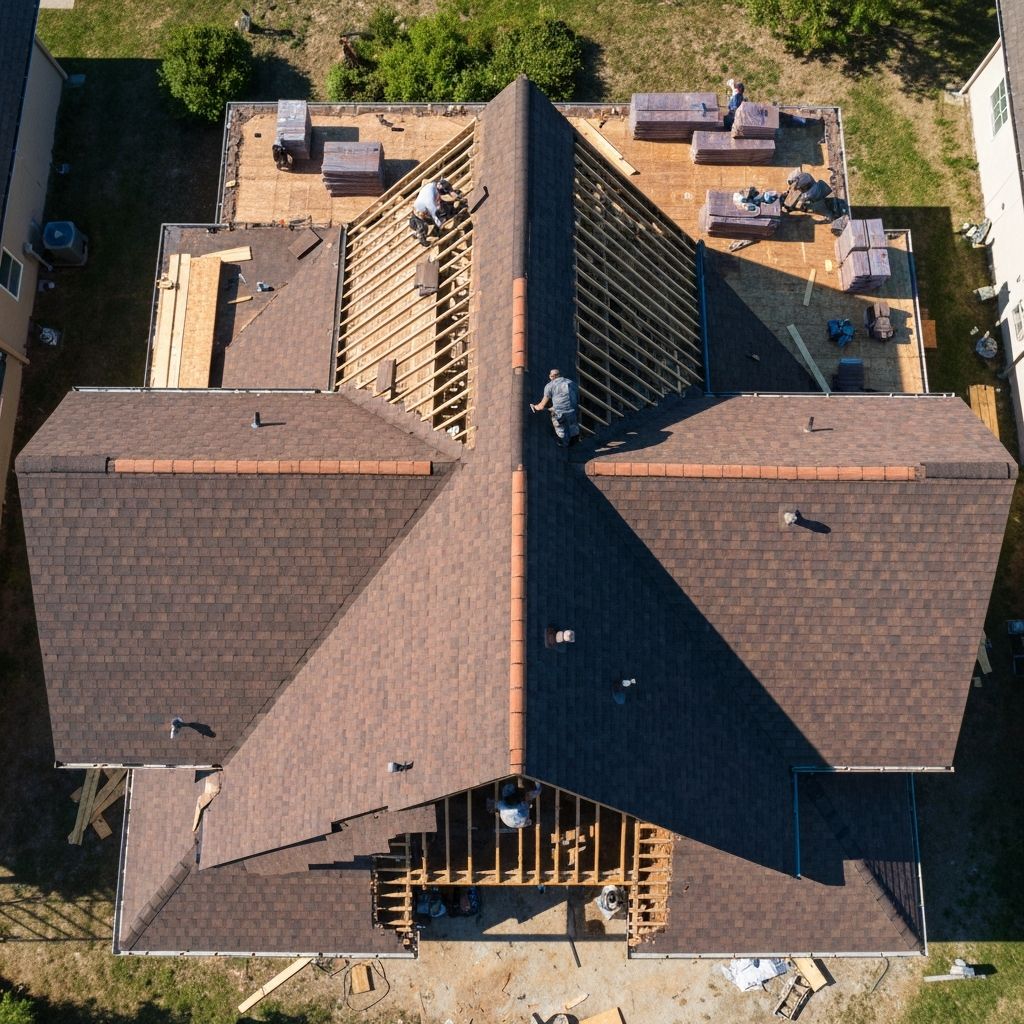
The structural base of your roof, typically made of plywood or oriented strand board (OSB). The deck provides the foundation for all roofing materials and must be solid to support the roofing system.
Underlayment
A water-resistant or waterproof barrier installed directly on the deck before shingles. Modern options include synthetic underlayment (more durable) and traditional felt paper (15-lb or 30-lb).
Shingles
The outermost layer of most residential roofs. Available in asphalt (most common), architectural/dimensional, three-tab, wood shake, slate, tile, and metal options.
Starter Strip
A row of shingles or specialized starter material installed at the eaves and rakes before the main shingle courses. Provides a seal and wind resistance at the roof's edges.
Ridge
The highest point of the roof where two sloped sections meet, running horizontally across the top of the structure.
Ridge Cap
Special shingles or trim designed specifically for the ridge, providing a finished appearance and weather protection at this vulnerable junction.
Roof Structure Terms
Slope (Pitch)
The angle of your roof, expressed as a ratio of vertical rise to horizontal run. For example, a 6/12 slope rises 6 inches for every 12 inches of horizontal distance. Steeper roofs shed water faster but cost more to install.
Rafter
The structural beams that extend from the ridge to the eaves, providing the framework for the roof deck. Rafters determine the roof's shape and support its weight.
Truss
A pre-fabricated structural unit that combines rafters, joists, and support members. Trusses are faster to install than traditional rafter framing.
Eave
The horizontal edge of the roof that overhangs the exterior wall. Eaves help direct water away from siding and protect walls from rain.
Rake
The sloped edge of the roof at the gable end. Like eaves, rakes typically overhang the exterior wall.
Valley
The internal angle where two roof planes meet, creating a channel that directs water runoff. Valleys are high-risk areas for leaks and require special attention during installation.
Hip
The external angle where two roof planes meet, sloping downward from the ridge. Hip roofs have four sloped sides meeting at the top.
Gable
The triangular wall section at the end of a pitched roof, extending from eaves to ridge. Gable vents are often installed here for attic ventilation.
Dormer
A roofed structure projecting from a sloped roof, typically containing a window. Dormers add light and space to attic areas.
Flashing and Sealing
Flashing
Metal pieces installed at joints, transitions, and penetrations to prevent water intrusion. Common materials include aluminum, galvanized steel, copper, and lead.
Step Flashing
L-shaped metal pieces installed in a stair-step pattern where a roof meets a vertical wall, such as a chimney or dormer.
Counter Flashing
Metal flashing installed over step flashing on vertical surfaces like chimneys, embedded into mortar joints to create a watertight seal.
Drip Edge
Metal strip installed along eaves and rakes to direct water away from fascia and into gutters. Required by most building codes.
Pipe Boot (Pipe Collar)
A flexible rubber or metal flashing installed around plumbing vent pipes. Pipe boots have a limited lifespan and are common leak sources.
Valley Flashing
Metal installed in roof valleys to channel water. Can be open (visible metal) or closed (covered by shingles).
Ice and Water Shield
Self-adhering waterproof membrane installed in vulnerable areas like valleys, eaves, and around penetrations. Required by code in many areas.
Ventilation Terms
Ridge Vent
Ventilation installed along the ridge, allowing hot air to escape from the attic. Works with intake vents to create airflow.
Soffit Vent
Openings in the soffit (underside of eave overhang) that allow fresh air to enter the attic. Critical for proper ventilation.
Box Vent (Turtle Vent)
Static exhaust vents installed on the roof surface. Less effective than ridge vents but suitable for certain roof designs.
Power Vent
An electrically powered fan that actively exhausts hot air from the attic. Solar-powered versions are also available.
Gable Vent
Louvered vent installed in the gable wall to allow air exchange. Works best in pairs on opposite gables.
Balanced Ventilation
The ideal ventilation design with equal intake (at soffits) and exhaust (at ridge or vents). Prevents moisture buildup and extends roof life.
Shingle-Specific Terms
Three-Tab Shingles
Basic asphalt shingles with three uniform tabs, creating a flat, repetitive appearance. Less expensive but shorter-lived than architectural shingles.
Architectural Shingles (Dimensional)
Multi-layer asphalt shingles with varied contours creating a three-dimensional appearance. Heavier, more durable, and longer-lasting than three-tab.
Granules
Ceramic-coated minerals embedded in the surface of asphalt shingles. Granules provide color, UV protection, and fire resistance. Granule loss indicates shingle aging.
Fiberglass Mat
The base layer of modern asphalt shingles, providing strength and tear resistance. Replaced organic felt mats in most modern shingles.
Self-Sealing Strip
Thermally activated adhesive on shingles that bonds layers together after installation, providing wind resistance.
Exposure
The portion of shingle visible after installation. Typically 5-5.75 inches for standard shingles.
Nailing Zone
The designated area on each shingle where fasteners should be placed. Proper nailing is critical for warranty and performance.
Installation Terms
Tear-Off
Removing the existing roof system down to the deck before installing new materials. Preferred over overlay for complete inspection and repair.
Overlay (Recover)
Installing new shingles over existing ones. Limited to one layer in most areas and can hide underlying problems.
Square
A unit of roof measurement equal to 100 square feet. Roofing materials are typically priced and ordered by the square.
Courses
Horizontal rows of shingles from eave to ridge. Each course overlaps the one below by a specified amount.
Offset (Stagger)
The horizontal distance between joints in successive shingle courses. Proper offset prevents water intrusion at seams.
Field
The main expanse of the roof surface, excluding edges, valleys, and penetrations.
Penetration
Any element that passes through the roof surface, including vents, pipes, skylights, and chimneys.
Edge and Trim Terms
Fascia
The vertical board at the end of rafters, where gutters are typically attached. Fascia should be inspected for rot during roof replacement.
Soffit
The underside of the roof overhang, between the fascia and the exterior wall. Often contains ventilation openings.
Rake Edge
The finished edge of the roof at the gable, often covered with metal drip edge and shingles cut at an angle.
Damage and Problem Terms
Blistering
Bubbles or raised areas on shingle surfaces, caused by moisture trapped in the shingle or poor ventilation.
Curling
Shingle edges turning upward or downward, indicating age, poor ventilation, or manufacturing defects.
Cupping
Shingle centers rising higher than edges, creating a concave appearance. Often caused by moisture from below.
Buckling
Visible waves or ripples in the shingle surface, often caused by improperly installed deck or wrinkled underlayment.
Ponding
Water that remains standing on a roof 48+ hours after rain. Common on low-slope roofs and indicates drainage issues.
Alligatoring
A pattern of cracks resembling alligator skin, indicating severely aged asphalt materials.
Wind Damage
Lifted, folded, or missing shingles caused by high winds. Can also break the seal on self-sealing strips.
Hail Damage
Impact marks from hail, appearing as dark bruises on shingles, dents in soft metals, or cracked/broken materials.
Insurance and Warranty Terms
ACV (Actual Cash Value)
Depreciated value of your roof, accounting for age and wear. ACV policies pay less than the replacement cost.
RCV (Replacement Cost Value)
Full cost to replace your roof with similar materials, without depreciation. RCV policies provide better coverage.
Deductible
The amount you pay out-of-pocket before insurance coverage kicks in. Can be a flat dollar amount or percentage of coverage.
Supplement
Additional claim filed for costs discovered after the initial insurance estimate, such as hidden damage or code upgrades.
Xactimate
Industry-standard software used by insurance companies and contractors to create detailed roofing estimates.
Manufacturer Warranty
Coverage from the shingle manufacturer for material defects. Duration varies from 25 years to lifetime, depending on product.
Workmanship Warranty
Coverage from your contractor for installation defects. Length and terms vary significantly between contractors.
Prorated Warranty
Coverage that decreases over time, paying less as the roof ages. Common in manufacturer warranties after initial full-coverage period.
Code and Compliance Terms
IRC (International Residential Code)
The model building code adopted by most states, including requirements for roofing materials, installation, and ventilation.
Wind Rating
The wind speed a roofing material is tested to withstand. Texas coastal areas often require higher wind ratings.
Impact Rating (Class 1-4)
Resistance to hail damage, with Class 4 being the highest. Many Texas insurers offer discounts for Class 4 rated roofs.
Fire Rating (Class A-C)
Resistance to external fire exposure. Class A is the highest rating and is required or recommended in many areas.
Using This Glossary
When reviewing contractor quotes or insurance documents, refer back to these definitions. Understanding the terminology helps you ask better questions, evaluate proposals, and make confident decisions about your roof.
Have questions about terms not listed here? Contact Hive Roofing—we're happy to explain anything about your roof in plain language.
About Hive Team
Hive Team is a roofing expert at Hive Roofing and Solar with over 15 years of experience in the industry. He specializes in residential roofing and is passionate about helping homeowners protect their investments.
Need a Roof Inspection?
Our experts can assess your roof's condition and provide honest recommendations.
Get Free Estimate